

How can safety managers monitor hydration status precisely?
In extreme summer environments, dehydration can begin affecting the body before visible symptoms appear. Reduced concentration, slower reaction time, fatigue, and heat stress can all develop gradually across outdoor and high-temperature operations.
Globally, rising temperatures continue to increase the pressure on outdoor workforce environments. In fact, 18 of the last 19 summers were recorded among the hottest on record worldwide.
Research around workforce heat exposure also continues to show the scale of the challenge:
- Individuals under heat stress conditions are 4x more likely to experience occupational heat strain
- 35% of workers experience occupational heat strain
- 30% of the workforce report productivity losses linked to heat conditions
- 15% of workers suffer from kidney disease or acute kidney injury related to dehydration and heat exposure
- Over 75% of workers arrive moderately dehydrated or worse
- 78% of associates suffering from heat illness were dehydrated despite drinking water
Traditional hydration practices often rely on observation, worker feedback, or symptoms that may appear only after dehydration has already progressed.
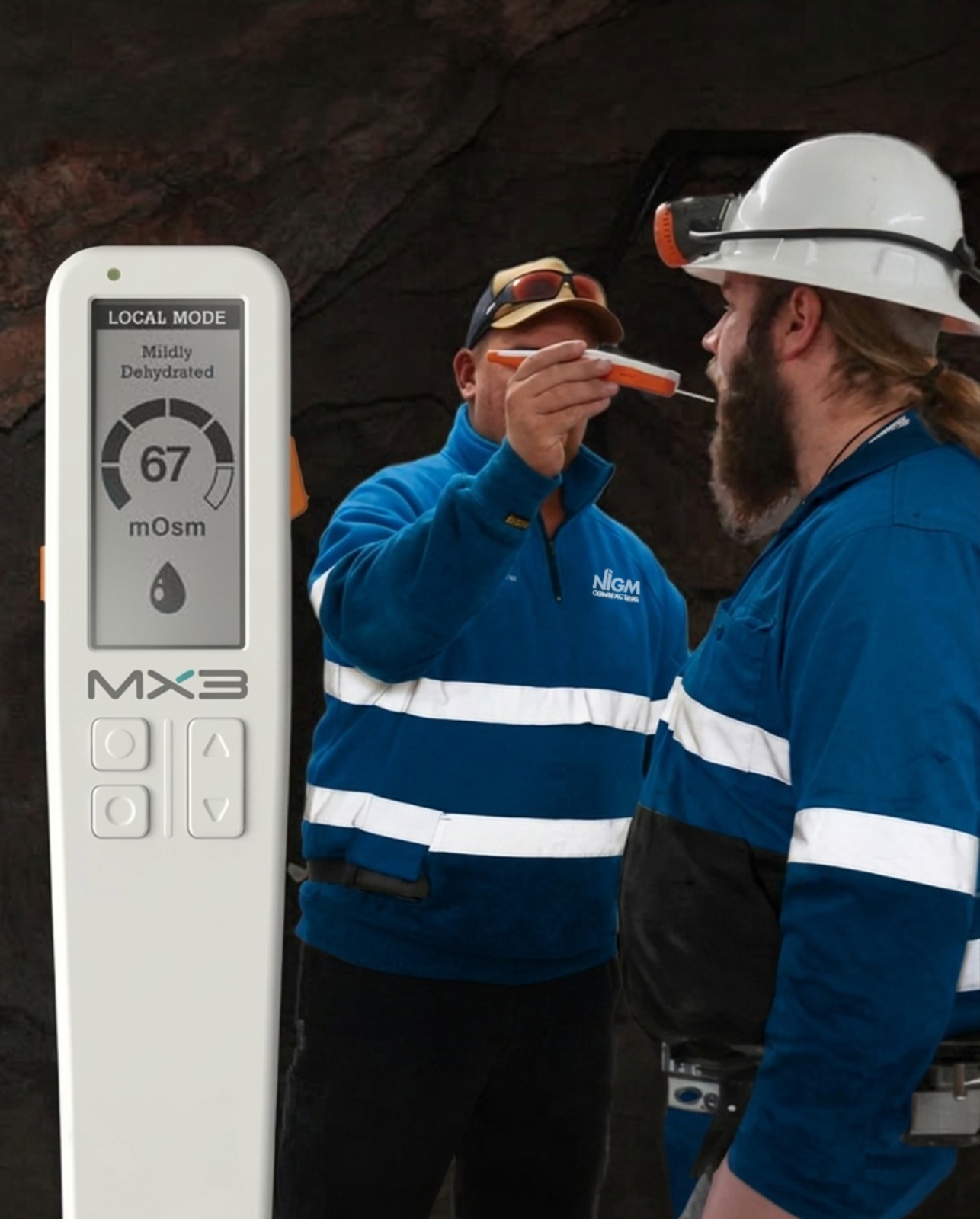
To strengthen hydration monitoring during the summer season NIGM is implementing the certified MX3 Hydration Test system — an advanced saliva-based hydration testing method designed to provide faster and more precise hydration assessment directly on site.
Used across military, sports and fitness, and workforce safety environments, MX3 combines rapid saliva-based testing with a centralized digital tracking portal, allowing operational and HSE teams to monitor hydration levels more proactively and identify risks earlier across daily operations.
NIGM is currently the first company in the UAE to implement this advanced hydration monitoring method across workforce operations.